About a year ago, I wrote a blog post on how to tell if information sources are trustworthy or not. Since repetition helps information retention, I decided it was time to revisit an updated version post. Especially now as we are approaching election season, it is critical that we are relying on trustworthy sources to give us accurate information. There’s a lot of junk out there, but we can sort through it together. Continue reading
Science
How to Genetically Engineer Your Dragons and Tomatoes
Last week, a group of Nobel laureates sent a strongly-worded letter to groups opposing genetically modified foods, urging the groups to look at scientific evidence when considering life-saving foods for impoverished countries. The bulk of the letter focused on opposition to Golden Rice, a GM strain that could provide essential nutrients to some of the poorest in Asia and Africa, yet it is heavily opposed by influential groups such as GreenPeace. Frustration in the letter-writers was clear especially in the closing when they ask “How many poor people must die before we consider [opposition to GMOs] a crime against humanity?” Continue reading
Free Trip to a Museum or Starbucks..?
Friends, family, and readers! I’m interested in getting a bit of background information on the folks who regularly or occasionally read my blog. (Or heck, even if you’ve never read it, but you were intrigued by my dazzling flowery banner at the top.) My goal is to learn a little bit more about all of you so that I can better meet your interests and reading needs.
Once you have taken the survey, either message my Facebook blog page or comment “Done!” on the Facebook share. On Wednesday, July 13th, I’ll randomly pick one person to win their choice of either $10 to Starbucks or two tickets to the Carnegie Museum of Natural History. (And to ensure it’s random, I’ll use a spreadsheet.)
Thanks so much! Keep exploring!
Backyard Wildlife
Turn on Discovery Channel, Animal Planet, or Nat Geo Channel, and you will probably be able to find a couple cool shows about exciting animals. Fierce predators, insanely huge fish, marine mammals that you just want to cuddle to pieces – really interesting stuff! The downside is that most wildlife shows focus on “exotic” animals. You’ve probably even seen a show on something like arctic foxes from the tundra or elephants herd on the African grasslands, but a PBS Nature special your own backyard wildlife? Maybe not quite as common. So how about we take a firsthand look at what’s in our own neighborhoods together? How will we do that?
Ladies and Gentlemen, for my next trick, I would like to make pictures out of thin air! Well, I’ll take pictures with a strategically placed trail camera that is motion-and-heat-sensing to allow snaps of moving animals but not the blowing wind. Doesn’t quite have the same ring to it…ah well.
Trail cameras, or camera traps, are a fantastic way for researchers to observe elusive wildlife (like snow leopards or Andean bears), and state and federal agencies use them monitor wildlife populations across the country. I used a trail camera in my Wildlife Monitoring class that I taught at the Pittsburgh Zoo and PPG Aquarium, and I’ve heard of some school districts allowing teachers to use them for class projects. But, honestly, they can also be useful for learning on your own or with your kids.
If you guys would like to play along at home, I bought this camera:
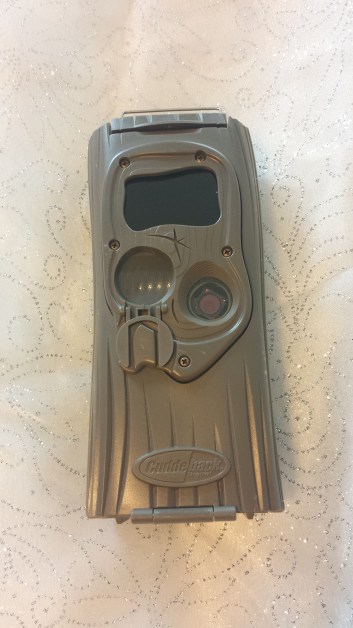
Sparkly background not included
It’s a Cuddeback trail camera that I got from Cabela’s for $99. Though often used by hunters, I just want to scope out what kind of wildlife is right there under my nebby nose. I’m setting this up today in the backyard of a friend’s house, so I will be sure to share with you all as soon as I have some images!
For those of you want to try this, I would highly encourage you to give it a whirl. If you’re concerned about the price, let me know and I can try to put folks in touch if they would like to share a camera. Land owners, you might be amazed with what visits your property. If you really don’t have any space (I don’t either, no worries), it might worth a try to ask a local park if they would let you do a trail camera survey for fun. They might be interested in what you find as well! Just be sure when you’re using a camera that you obey all local ordinances involving privacy, and if it’s not your land, ALWAYS get permission first!
Once you’ve found a camera, it simply needs to be placed (mine straps around a tree), and then left alone. Super easy. Do keep in mind where the camera is pointing, or you will have pictures of either all dirt of all tree top. I would also recommend checking your camera on a regular basis to be sure it isn’t stolen or damaged. Beyond that, if you’re just placing a camera for the joy of learning, it’s a very simple process. (If you are interested in more technical details for research or wildlife management, see here.)
In the past, I’ve used my trail cam in the Highland Park area in Pittsburgh. We’ll see what I find next in the North Hills!
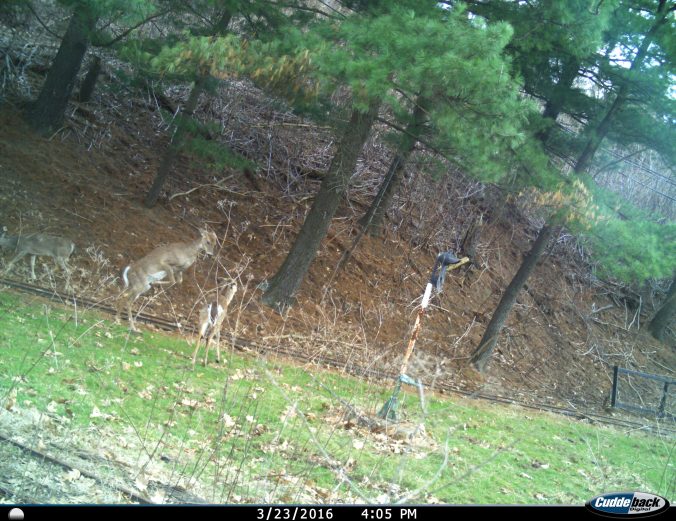
That was MY clover!!

Female at night

Young buck at night

Ahh, the elusive Maria Sleeve.
Find the Frogs!
Over the weekend, the hubby and I had a few minutes to take a walk around my parents’ neighborhood in central Ohio. Though firmly rooted in the suburbs, we came across the tiny remainders of a wetland (presumably drained) at the edge of the neighborhood. Cattails grew on both sides of what had turned into something a drainage ditch, and duckweed and some sort of potamogeton floated here and there in the shallow water. What we enjoyed best though–frogs! It may have been a small space, but this little patch of habitat was crowded with green frogs. I only had my phone on me, but I snapped a few pictures that I thought would be fun to share. Can you find the frogs in the pictures below?
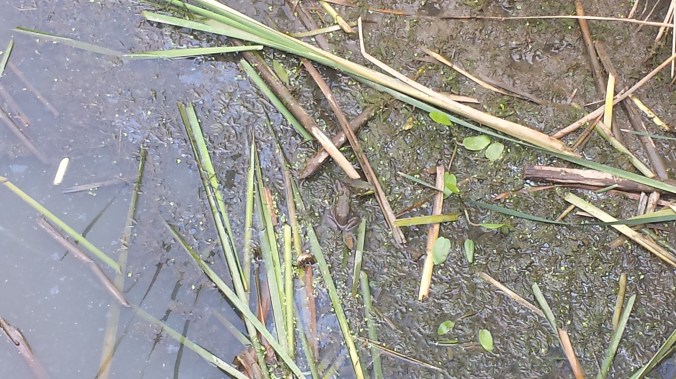
One frog here…not too hard to find.

A little tougher…

Oh that camouflage…
Found the frogs? Excellent! Now, while I have the floor, I do want to highlight a few things about frogs that are super important.
- Frogs, along with other amphibians, are invaluable as indicator species. If there is a problem with a habitat, frogs and salamanders are among the first kind of living things to struggle because of their thin semi-permeable or permeable skin. And this is very important: if there is a problem with a wetland or a waterway, it’s not just a problem for “nature.” It’s a problem for us as well.
- Amphibian populations around the world are declining. There are a number of speculated causes, but high on the list are habitat loss and the spread of the chytrid fungus.
- Why are frogs helpful for you? For one thing, their diet includes a number of pesty insects including (wait for it)…mosquitoes. So, if you’re not a fan of getting bitten by creepy crawlies, you like frogs.
- Why else are frogs helpful for you? A looming medical disaster is the rise of antibiotic resistant bacteria. Countless numbers of human lives have been saved over the past several decades through the use of antibiotics, but a shadow is falling over that triumph as bacteria have begun developing resistance to what used to be effective treatments. However, antimicrobial peptides from frogs’ skin secretions may be one of the hopes for the future of bacterial infection treatment. If we keep our frogs safe, we might also be safeguarding medicines for the next generation. (P.S. This is for another post, but I can’t help it: you can help slow the rise of antibiotic resistant bacteria. If you are prescribed an antibiotic, be sure you use the medication only as directed by your doctor. Please do not Google “Do I have to finish my antibiotics.” Your doctor examined you; a blogger with an opinion did not. That includes me! Also, be aware that antibiotics are useless against viral infections, so don’t pressure your doctor if they say you’ll just have to wait it out. Most importantly: never share medication. Now back to frogs!)
- If you still don’t believe me about how crazy cool frogs are, trust the experts at the Smithsonian! If anyone has fun facts, they do 🙂
More Summer Time Happenings
Earlier this week, I posted a tidbit on how to keep your family’s summer full of science. One other way to add a splash of learning fun to your kids’ summer is to look into the day camps offered in your area. Since I live in Pittsburgh (and I must say, we are spoiled with the resources we have in this city!), my suggested camps are a bit biased to the general Western PA area. However, some quick searching online will most likely reveal some exciting opportunities no matter you are. Start with your local museums and even universities. They often partner with organizations for fun educational camps.
If camp costs are in issue, which they most certainly can be, check to see if scholarships are offered before going another direction. Many of the camps listed below have funding ready to help families with the cost, especially if multiple kids are involved. And if that doesn’t work out, I will say this: Don’t Underestimate Your Local Library. Besides Vacation Bible School, I only went to camps a few times as a kid myself, but we took part my local library’s activities on a very regular basis. In Pittsburgh, we have the fantastic Carnegie Library that offers classes and programs for all ages—toddlers, kids, teens, and adults. Take advantage of that! Even if you go to camp!
Pittsburgh Camps with A Science or Nature Theme
Pittsburgh Park Conservancy— Go outside! Get muddy! Learn about the habitats of western Pennsylvania! It will be glorious J Their camps run for 3 years olds up to kids just finishing 7th grade. http://www.pittsburghparks.org/summer-camps
Carnegie Museum of Natural History—I’ll admit, I love animals and I love the outdoors, but the museum has a lot of local institutions beat when it comes to variety. Offering different-themed camps almost every week—plus nature camps out at their field station, Powdermill Nature Reserve in the Laurel Highlands—I would be willing to bet my Wonder Woman mug that there is something for everyone through the museums camps. http://www.artandnaturalhistory.org/camps/
Carnegie Science Center—Like the natural history museum, the science center features a variety of different camps focusing on anything from Mars to robotics to the chemistry of the kitchen. There are different topics every week for the different age groups (ages 4-12+), and they do a fantastic job of showing how science is mixed into so many tiny corners of our everyday lives! And they do it with games and snacks. Really hard to go wrong with snacks. http://www.carnegiesciencecenter.org/programs/summer-camps/
Animal Friends— A creative approach to teaching children the responsibility of taking care of animals, the Animal Friends shelter offers a day camp that invites children ages 4-17 to learn about the care and training of companion animals. Mixed in with crafts, games, and age-appropriate activities, the camps sell out quickly, but, I’ll be honest, sound awesome! http://www.thinkingoutsidethecage.org/site/c.elKWIeOUIhJ6H/b.8627157/k.74A8/Camps_for_Young_Pet_Lovers.htm
National Aviary—As the only bird-focused zoo in the country, the aviary’s camps have a strong focus on avian conservation with a good dose of adventure mixed in! The camps are built beginning with 4 year olds who will learn what makes a bird a bird, and continue up to 18 year olds who will go in-depth with avian veterinary science and hands-on bird care. http://www.aviary.org/Summer-Camps
iD Tech Camp (CMU)—This goes a little out of my comfort zone, but if you have a budding young computer scientist, and she just can’t get enough of programming, the iD Tech Camps at CMU would be worth looking into. A part of a network of universities catching the future generation of computer scientists, the camp is an intensive program on CMU’s campus. The notable drawback is the tuition, which probably very limiting for families. However, I do believe they offer scholarships. https://www.idtech.com/locations/pennsylvania-summer-camps/pittsburgh/id-tech-carnegie-mellon-university/
Phipps Conservatory— Campers age 2-13 will learn all about caring for plants, uses for plants, conservation, and sustainability at the day camps of the Conservatory. Ok, well, the toddlers probably aren’t quite going for sustainability yet, but they will love playing with dirt and bugs 🙂 https://phipps.conservatory.org/classes-and-programs/for-children/seasonal-camps
Pittsburgh Zoo and PPG Aquarium—If your kids love animals and maybe already have that little spark of passion for conservation, try zoo camp! Every day they’ll meet new animals, play games, sing songs, and learn about how they can help protect wildlife. Older campers will get to go behind the scenes at some of the animal exhibits and meet with keepers to learn about what it’s like to work with animal ambassadors. http://www.pittsburghzoo.org/Education/ZooCamp
Summer Science at Home
Summer is almost here! If the school year was a sundae, we’d be scooping up the last of the melted ice cream and swirls of chocolate fudge from the bottom of a soda shop glass. What does summer mean for kids and families? Technically, it probably means that the schedule is already jam-packed with soccer camp, band camp, family vacation, gymnastics class, volunteering, internships, and mowing the yard.
Oh, but summer also can mean something very exciting…something that better get you hopping on the edge of your seat and reaching for a lab coat…summer can also mean…more time for science!! In the down time from school, you and your family are the lucky winners of some opportunities to keep those critical thinking skills sharp and your excitement for knowledge bouncing! Here are a few ways to keep science going at home over the summer. *Note, this post is intended for parents, but if you’re under 18 and you found it, great! Just be sure to check with a parent or guardian before trying any experiments at home.*
Make Little Bits of Your Summer Inquiry-Based
One way to keep learning minds fresh is to engage in the challenges and quests of inquiry-based learning. Inquiry-based learning means learning through experiences and probing for answers, rather than being given all the facts to memorize up front. It’s a hands-on approach. In a classroom, that could mean being presented with a case study or a scenario, and the students would need to reason through the case to eventually learn and understand the information after clarification from a teacher. The approach greatly helps with critical-thinking skills in addition to observational skills.
At home this summer, one of the things you can do as a family is try to plan for a few mini inquiry adventures. The best part of an inquiry-based or experiential learning approach is that the parents don’t need all the answers before get started. Start by picking a topic, maybe do a bit of background to give yourself a boost, and then start developing some questions that can be answered by observation or even experimentation.
For example, let’s say you want to take biology by the cornibus and visit a nature park, but you’re not quite a field naturalist yet. That is A-Ok. With an inquiry-based approach, you can arm yourselves with guide books and a field journal, and start asking questions. Try focusing on a particular aspect of the environment to keep yourself from being overwhelmed. A few question examples that don’t particularly require background knowledge but are fun to answer are below:
- Are the kinds of plants near the stream the same or different as the kinds of plants near the meadow? Why might that be?
- Can we hear more bird calls at the forest edge or in the forest interior? Why might that be?
- Is there a fair bit of the scat on the ground (oh the fun with poop) or no? What kind of mammals might have been passing through?
- What size pebbles are at the bottom of the creek? Are they big pebbles or small pebbles? Why might pebble size matter?
A key part of inquiry is to work through your questions; in many ways, that process is more important than the answer. As you reason through your question and observations, take some field notes, make sketches– just write as much down as you can. You’ll probably be impressed with what you take note of, and you will definitely be impressed with what your kids observe! And as a bonus, most parks have great naturalists you can pass on some of your questions to if you get super stumped with your guide books 🙂 It’s a great way to get more out of a hike.
Science at Home
Maybe exploring completely new territory isn’t your cup of iced coffee yet, and you want to start with a bit more guidance. Not a problem! If you’re up for a few good home-cooked adventures, here are some great resources below for easy experiments. There are instructions and explanations for the suggested projects, but I’d recommend familiarizing yourself with the concepts behind the experiments, either with a text book or a trusted source. Also, most of the projects can be done with common household items or something you can easily pick up at Target. (But beware—I ALWAYS tell myself I only need facewash and socks when I go in that store…but a new mop, two sweaters, light bulbs, throw pillows, and a box of granola bars later…)
Scientific American—Education, Bring Science I love some of the projects on this page. Many of them seem geared for roughly fourth grade and up, but honestly, younger kids would probably like many of the activities too (they just may not understand all of the explanations.) What I really like about the directions page for each project are the question prompts. A key part of scientific inquiry is being able to reason through your methods and results, and the prompts will help work on those critical thinking skills.
University of Wisconsin—Science is Fun, Home Experiments This page has a number of different experiments that you can conduct at home, plus the explanations for how and why the experiments work. Some of the activities are a bit advanced or involved, depending on what kind of resources you have around the house; but overall the page has quite a few great ideas!
Scholastic—Videos of Experiments Maybe today just feels like a quiet afternoon. Maybe you have dinner guests coming and the kitchen needs to stay clean. No matter! Here is a list of some great videos of experiments that you can watch, and perhaps try yourself later. As a side note, some of these videos give great explanations of what’s happening, but some are going to require a little bit of research—hey that could be a good idea though!
Lab Safety
Even if you’re working with baking soda and vinegar, it is always important to keep safety in mind. The stereotype of a scientist in lab coat and goggles came about for a reason, and that reason is to protect yourself! Even at home. Before you get started on a project, what sort of PPE (Personal Protective Equipment) will you need? For most of the projects here, old clothes and some sort of glasses or goggles are probably all that you really need, maybe even gloves if you want to be safe (and let’s be real here, you’ll look cooler anyway.) Amazon has some cost-effective starter gear, if you’re interested. And after every experiment, be sure to wash your hands!
Steel City Science

I moved to Pittsburgh almost seven years ago when I first started graduate school. On the one hand, the first thought that pops into my head is “Holy crikeyness, that long ago? I’m old.” But quickly behind that thought is how much I’ve come to love this city. From my beloved hockey team to the view driving out of the Ft. Pitt Tunnels to the phenomenon of pierogies, Pittsburgh has become my second home. Beyond the sentimentality, though, is the science. Pittsburgh, aka, the Steel City, has a unique collection institutions and universities that produce some fantastic research ranging from robotics to wildlife biology, and everything in between.
Since I haven’t posted anything on here in precisely an age, I thought a good way to jump back in the writing boat would be to showcase some of the folks in Pittsburgh who work on really fantastic projects. And I’ll be honest, this post really should have been titled something like “Steel City Bio” since I’m a bit biased to living things, but I have an affinity for alliteration. And maybe I’ll have a sequel in the future! So without further hubbub…
~The Researchers~
Dr. Jonathan Pruitt—Assistant Professor at the University of Pittsburgh
We regular Joes and Josephines may shudder when we see single spider, let alone a group of spiders all hanging out together; but the cooperation between these eight-legged, erm, friends is precisely what gets Dr. Pruitt’s inquisitive wheels rolling. A behavioral ecologist in Pitt’s biology department, Dr. Pruitt focuses on intraspecific interactions between social spiders. In other words, he studies spiders that live and work together in giant colonies with giant webs (calming breaths and a happy song.) In addition, it turns out that within these colonies, individual spiders have personalities and “careers” based on their personality. The combination of different personalities within a colony of spiders has a direct impact on the persistence/survival of the entire colony! Now how’s that for spidey-senses?

~~
Dr. Steve Latta—Director of Conservation and Field Research at the National Aviary
As the lead scientist at one of only a handful of institutions on the continent to be completely focused on birds, it makes complete sense that Dr. Latta is an ornithologist extraordinaire. His research has ranged from the biology of various species of songbirds and raptors to avian ecology and conservation as a whole. The National Aviary currently is overseeing a variety of projects including migratory bird habitat restoration, urban peregrine falcon monitoring, Louisiana waterthrush, and some citizen science efforts. You can learn more about what Dr. Latta and the Aviary are up to here!
As a few fun facts, Dr. Latta also keeps chickens and sold me a tank for the California kingsnake I kept in graduate school 🙂

~~
Dr. Jose Padial—Herpetology Curator at Carnegie Museum of Natural History
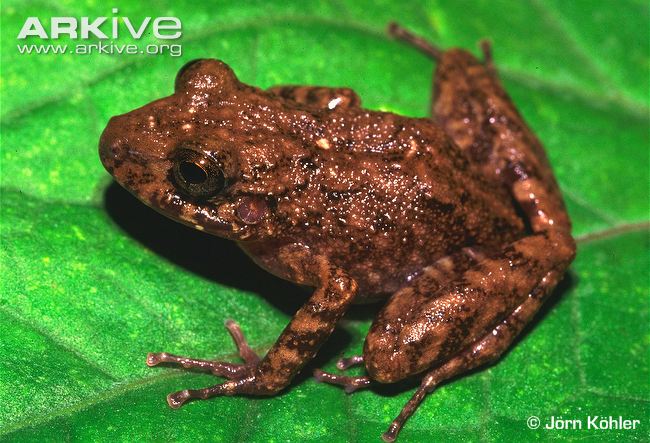
A little like Dr. Pruitt’s spiders, Dr. Padial’s herps (reptiles and amphibians) might cause a shudder in some folks, but with a dash of an open mind, anyone can quickly see how cool his work is. Part evolutionary biologist, part conservationist, Dr. Padial’s has been a part of projects that span phylogenetics, speciation, biogeography, taxonomy, and any synthesis of these disciplines. While in Pennsylvania, he works with local species, but he also regularly travels to South America for a focus on frogs of the Amazon.
~~
Dr. Joe Gaspard—Director of Science and Conservation at the Pittsburgh Zoo and PPG Aquarium
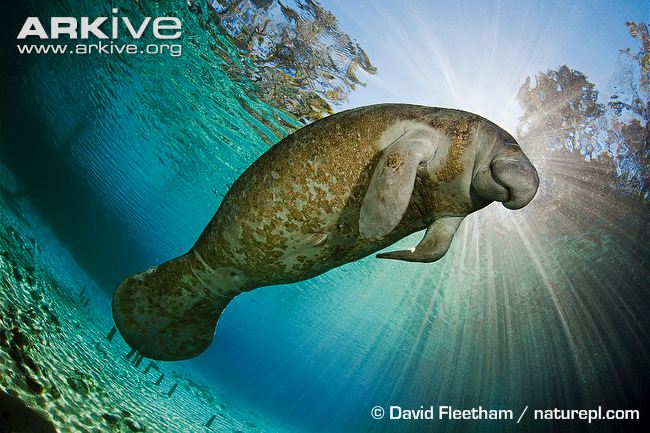
Many folks aren’t aware of how large a role zoos can play in wildlife research, but I can help with that! Dr. Gaspard came on board at the Pittsburgh Zoo in 2014, but before that, he had built up quite the publications list in the world of marine biology. Working on topics ranging from manatee vision, hearing and touch to loggerhead sea turtle biology, Dr. Gaspard has a brought a broad background with him to Pittsburgh—especially useful with the addition of the elephant seal Coolio currently in rehabilitation in the aquarium.
~~
Dr. Brady Porter— Associate Professor at Duquesne University
Think I was going to leave this one out? Dr. Porter’s evolutionary biology background traditionally focused on conservation and the population genetics of freshwater fishes, but in recent years, work from his lab has included studies on toads, Louisiana waterthrush, golden eagles, and bald eagles. In addition to his own research, Dr. Porter has completed fish surveys with the Fish and Boat Commission, is on the board of directors for a local chapter of the Audubon Society, regularly organizes or takes part in such citizen science efforts as BioBlitzes and the Christmas Bird Count, and he used to have a grad student that looked like this.

~~
Bonus Round!
The next two folks aren’t directly in Pittsburgh, but they are close by. Both affiliated with West Virginia University in Morgantown, WV, they’re just a quick drive away from the ‘Burgh, and their respective projects have an impact well outside Western Pennsylvania. So I think you all should learn about them.
Dr. Tricia Miller—Research Biologist
Part of a team with my former academic co-advisor (Dr. Todd Katzner of the USGS), Dr. Miller specializes in movement ecology of birds of prey—golden eagles in particular. Her work has revealed the migratory routes for golden eagles in the eastern half of North America, and she has done a great deal of research on home ranges, habitat use, and flight biology of goldens. In addition, she has been a driving force behind research that aims to minimize the potentially negative effects of wind power on birds of prey while still maximizing wind use. Dr. Miller uses cutting-edge cellular telemetry technology for her work, and I would wager she has come in contact with more golden eagles than anyone else in the world. I should also mention that’s a part of the Eastern Golden Eagle Working Group, and they are pretty much anyone who is worth knowing 😉

~~
Dr. Jonathan Hall—Assistant Professor
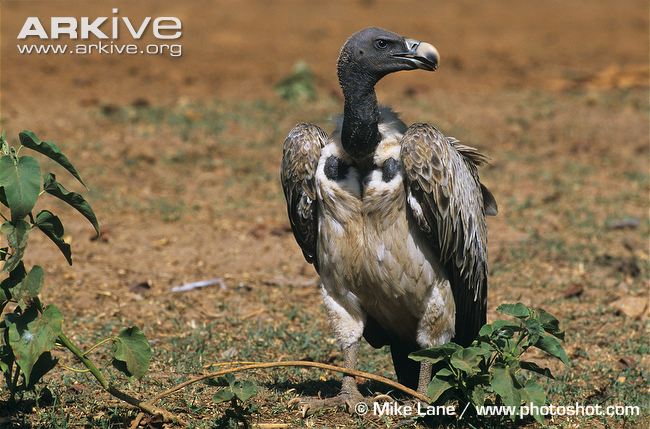
If you’ve ever wondered how our day-to-day lives can impact the wildlife around us, talk to Dr. Hall. Though his research focuses on the effects of subsistence culture, I’m sure he is more conscientious than most of us when comes to an awareness of the human-wildlife interface. An ecologist by training, Dr. Hall’s work has covered the effects of weather patterns on vultures, the effects of cultural conservation practices on biodiversity, and broadscale ecological community interactions in rural India. And even more importantly, as a former Buckeye, he knows that The is part of the name at The Ohio State University.
That’s all for now, folks! Peace, love and science 🙂
The information on this website, crap or CRAAP?

Don’t you sometimes wish you just had Belle’s library?
The interwebz is an interesting place. You can find lists of the top 31 things only “Friends” fans will appreciate or lists of studies trying (mainly failing) to find a link between vaccines and autism. You can find glorious videos of David Bowie singing in sassy high heel boots in the Labyrinth or videos of little-known comedians in the 80’s. And then there’s this baby panda trying to make a break for it.
Aside from the fun and wonky, the internet is also a great place for basic information. Whether you’re trying to remember what poison ivy looks like or attempting to stave off a baking disaster (save the pie!!), a quick Google search is generally all you need. A more thoughtful search can also guide you through some complicated tasks, like tracking down a politician’s voting records or pulling up the details on a car or neighborhood before a major purchase. But…what about when you’re trying to wade through fact and opinion? What if you’re trying to find information on a subject that is hotly debated or poorly understood? What if you just want to be assured that the information you’re receiving from out there in cyber space is legitimate and trustworthy?
Ladies and gentlemen, I give you: the CRAAP test.
C.R.A.A.P. is a helpful mnemonic for remembering a few key characteristics for judging the trustworthiness of a source. Originally designed by folks at California State University, Chico, the CRAAP test asks readers to look for a source’s currency, relevance, authority, accuracy, and purpose. In the academic circuit, it’s largely taught to help students learn to identify scholarly sources and avoid, shall we say, less-than-legitimate websites. Outside the classroom, though, it’s still a handy map to carry on your quest for knowledge.
So what are the criteria we should be keeping in mind as we look for articles online or in print?
C– Currency. How recently was this article written? The publication date of a source can make all the difference in the world when we are talking about the accuracy of information. If the article or paper is more general background type information, you can get away with it being a bit older, but newer is always better. When I was an undergrad, we tended to avoid papers more than four years old when we were first getting in the habit of looking at source dates, but this really depends on the field and how quickly new information comes out. I’d say try to stick with information generated within the last couple of years, and you’re probably good to go.
R– Relevance. How relevant is a source’s information to the question you’re trying to answer? What was the intended audience of the source? As much as I prefer academic journals, I think if any of us were trying to look up information on heart disease, we would probably have an easier time with sources not intended for cardiologists. That being said, picking sources that are too simplified or tertiary might not even be helpful. If you find yourself needing to look up definitions every now and then as you look through a source, that’s fine; but if the article just reads like the Black Speech of Mordor, I’d go for something a bit less technical.
A– Authority. This. THIS. This is a big one, especially for web sources. Who is the author and why should I trust them?
- If your internet source doesn’t even give you an author, that’s Red Flag #1. If you don’t know who wrote the article, how are you going to trust it? And if an author is listed, what credentials do they have to be giving you their information? Are they doctors? Astronauts? Writers? Pastors? Philosophers? Lawyers? You want to find an author who is well-educated in whatever field you’re researching. You wouldn’t ask a mechanic to do your highlights, or a pediatrician to bake your wedding cake, so it makes sense that you wouldn’t look to a celebrity for medical information (though I do know a lawyer who is an excellent cook, and you should definitely check out her blog). Now granted, if you’re visiting websites like Autism Speaks or the American Cancer Society, you probably won’t be able to find authors on their background information pages. In that case, though, if you’re looking at a large, well-established organization, they’re probably reliable for basic information. Their information wouldn’t be suitable for a college-level paper, but it can give you quick facts.
- Is there any contact information for the author or publisher?
- Who is the publisher behind the author? Is it a biased source? For example, the American Coalition for Clean Coal Electricity is most likely not the most unbiased place to start researching the pros and cons of coal-driven energy, and as much as I’ve loved their safety instructors, the National Rifle Association’s website isn’t going to be helpful if you’re looking up crime or accident stats.
A– Accuracy. This seems like a no-brainer, but it’s tough when you’re exploring a new subject: how accurate is the source’s information? One of the quickest things to look for is the quality of the writing (dang, I just ruled myself out). Are there obvious typos, breaks in flow or logic (crap, crap, crap), grammar issues–things like that? They aren’t necessarily deal-breakers, but they are (hypothetically) more common in sources that have not been peer-reviewed.
What’s peer-review, you say? In a nutshell, peer-review is the evaluation of an article before it is published. The key is that the potential article is not just reviewed by an editor, but by “peers.” This means that if, for example, I did a study and wrote a paper on eagle genetics (who does that?), the journal I submit my paper to would send out my paper to a handful of reviewers. These reviewers would be other researchers who have strong backgrounds in genetics or birds of prey or both. They would pick apart all of my analyses, my rationale, and my conclusions to determine if I answered my scientific questions in the best possible way. If I have a break in logic or don’t properly explain my methods, they’ll catch it before it ever even goes to publication. They could also suggest that I perform more analyses before my paper is published (please no.) Essentially, peer-review helps keep the standard high.
If you’re trying to find information on a given topic, does the source have to be peer-reviewed? Well, probably not. If you’re a student writing a paper, that’s a different story, but in general, I would say it’s probably easier to look at the sources that your source is citing. Do they tend to be .gov or .edu sites? Do they tend to be biased organizations? Are any of their sources primary literature (something peer-reviewed)? Does the source primarily cite its own previous work rather than also including other sources? The types of a sources an article or webpage cites can be a huge indicator of accuracy. And if there are no works cited, beam me up, Scotty. We don’t want that planet.
P– Purpose. The last part of the CRAAP test asks what is the purpose of this article? Is the source trying to sell something? Is the article meant to inform? Is it to persuade? Does the author make clear when they are giving opinion rather than fact? If the article is meant to persuade, do they give solid references to back their opinions? This last item, like accuracy, can sometimes be a bit difficult to ascertain, but honestly, just being aware that there are different purposes for different kinds of writing really makes a big difference.
So there you have it folks, the CRAAP test. Sometimes I wish it had a better name, and sometimes I giggle to myself that I have a perfectly legitimate excuse to say “crap” in front of a classroom of college students (because I’m an adult). I hope it helps you out in your daily web cruising, and if you’re still in school, you can use this guide to amaze your profs with a beautiful reference list!
Peace, love, and science!
 Linnaeus and the Lamppost