When It’s More Than Just Your Average Lab

When I parked my car in front of the refurbished old school building that is now the Energy Innovation Center, my eyes were immediately drawn to the pollinator gardens dotting the parking lot. Oh, this is going to be a good afternoon, I thought. And I was not disappointed. I was there to catch up with Dr. Andre′ Samuel, a fellow Duquesne University alum, who received his Ph.D. in biology and took his degree in a direction no one has ever thought of in career counseling.

DSCN1318

Dr. Andre Samuel, director of the Citizen Science Lab

Continue reading

Top Ten Citizen Science Projects That You Can Join In

cit·i·zen sci·ence

noun

noun: citizen science

  1. the collection and analysis of data relating to the natural world by members of the general public, typically as part of a collaborative project with professional scientists.

When I was a kid, I had a burning desire to see how much electricity was in a bolt of lightning. I didn’t understand watts, volts, amps, or Ohms yet. All I wanted to know was if those bright streaks that crashed to the ground were strong enough to power a light bulb. Continue reading

New Name, Same Nerd

Hi folks!

I just wanted to give you all a heads’ up that I changed the name of my blog. Originally, I started with the title “The King’s Nerdy Daughter” a few years back during grad school, when I wrote maybe two posts a year. Now that I have a bit more of a plan of what I want to do with this blog, though, I thought it was a good idea to shake things up a bit. The new name for my little kingdom of words, as you can see above, is “Linnaeus and the Lamppost.” So, eh? How did I come up with that? Well I’m glad you asked!

Linnaeus

The first part of the name came from the Father of Taxonomy, Carl Linnaeus (also known as Carolus Linnaeus and Carl von Linne). He was a well-rounded scientist of the eighteenth century– a botanist, zoologist, and an explorer–and he developed the binomial nomenclature system that we use to name species today. Though he was proficient in a variety of disciplines, he is best known for his expertise in biological fields. Since this blog will definitely always have a biology slant, I thought that he was an appropriate figure. Besides a nod to a great naturalist, the name also reflects a bit of my Swedish heritage, as Linnaeus was himself from Sweden.

800px-CarlvonLinne_house

The Linnaeus house in Uppsala, Sweden (I’ve been there!) Wikimedia Commons

The Lamppost

Psalm 119:105 “Your word is a lamp unto my feet and a light unto my path.” Since my goal in renaming this page was to reflect that faith and science are an important part of who I am, I wanted a phrase or a word to represent my faith. What does a lamp do? It illuminates, it shares light, it reveals truth in darkness. If I can share a bit of what my faith looks like through my wonder of the natural world, then I will consider my efforts a success. Plus…there was a lamppost in Narnia. ‘Nuff said.

1930917_513227256835_7320_n.jpg

Mr. Tumnus?

Eventually I will shift my material over to a new domain name, but I will keep you all in the loop for when that happens.

In the meantime, keep exploring!

How to Tell if an Information Source is Trustworthy

About a year ago, I wrote a blog post on how to tell if information sources are trustworthy or not. Since repetition helps information retention, I decided it was time to revisit an updated version post. Especially now as we are approaching election season, it is critical that we are relying on trustworthy sources to give us accurate information. There’s a lot of junk out there, but we can sort through it together. Continue reading

From a Conservation Educator…

I don’t think I can remember my first trip to a zoo. My family visited the Columbus Zoo often when I was little, and the numerous visits have blurred together over the years and decades. What never blurred, though, was my love for the animals I saw on each visit. I remember parking myself at the gorilla exhibit over and over, and the awe never diminished. I had read all about these animals in the library books I regularly hoarded, but to see them live, in front me…to realize how powerful and how intelligent they were…to see how the silverback Mumba interacted with his family, sometimes playing with the young ones or chastising them when they got a little too goofy for his breakfast time preference…to see how curious they could even be about us humans…what a beautiful thing. Even as a child, I wanted to show the whole world how precious these creatures were. As I grew older, that passion to inspire love increased especially as I learned more about their decline in the wild and its implications. Continue reading

How to Genetically Engineer Your Dragons and Tomatoes

Last week, a group of Nobel laureates sent a strongly-worded letter to groups opposing genetically modified foods, urging the groups to look at scientific evidence when considering life-saving foods for impoverished countries. The bulk of the letter focused on opposition to Golden Rice, a GM strain that could provide essential nutrients to some of the poorest in Asia and Africa, yet it is heavily opposed by influential groups such as GreenPeace. Frustration in the letter-writers was clear especially in the closing when they ask “How many poor people must die before we consider [opposition to GMOs] a crime against humanity?” Continue reading

Free Trip to a Museum or Starbucks..?

Friends, family, and readers! I’m interested in getting a bit of background information on the folks who regularly or occasionally read my blog. (Or heck, even if you’ve never read it, but you were intrigued by my dazzling flowery banner at the top.) My goal is to learn a little bit more about all of you so that I can better meet your interests and reading needs.

Survey is here.

Once you have taken the survey, either message my Facebook blog page or comment “Done!” on the Facebook share. On Wednesday, July 13th, I’ll randomly pick one person to win their choice of either $10 to Starbucks or two tickets to the Carnegie Museum of Natural History. (And to ensure it’s random, I’ll use a spreadsheet.)

Thanks so much! Keep exploring!

Backyard Wildlife: The Discovery!

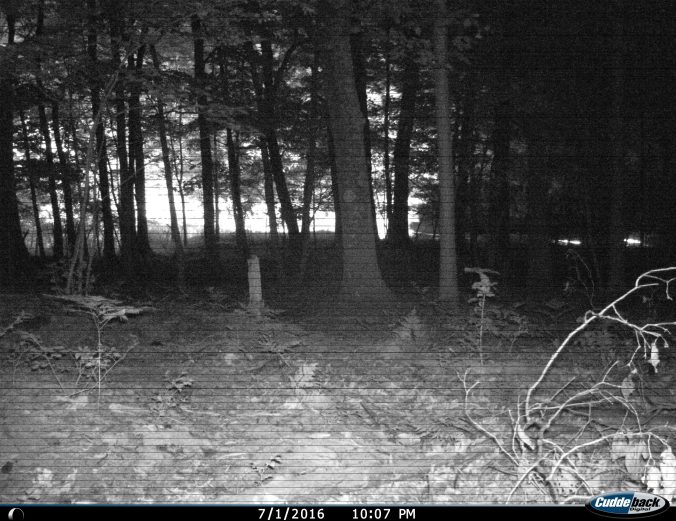
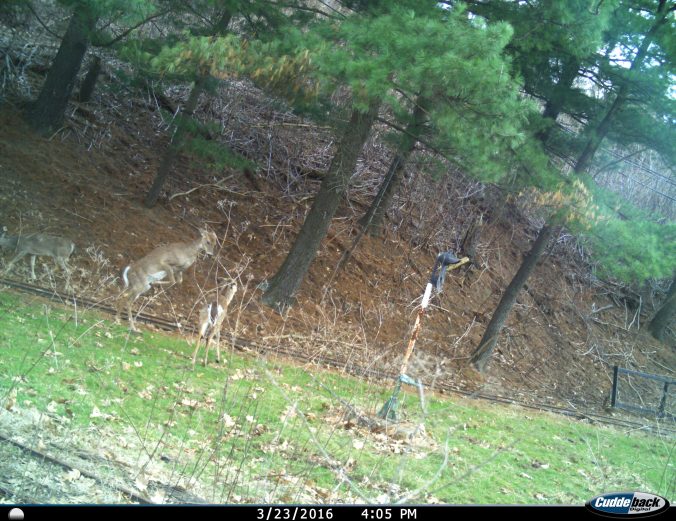
Well, ladies and gentlemen, we did indeed find wildlife on my trail camera! It was mostly deer, but I still think it’s a great way to visualize the natural world around even a suburban area.

I__00082

Nice young buck, velvet still on his antlers.

I__00078

Just a little fawn, still adorable with her spots 🙂

I__00080

Think she spotted the camera?

I__00084

Gettin in that Saturday morning jog!

I__00077

Bonus Footage: I think a train went by. Or did the neighbors leave their fire-breathing dragon out again?

I__00066

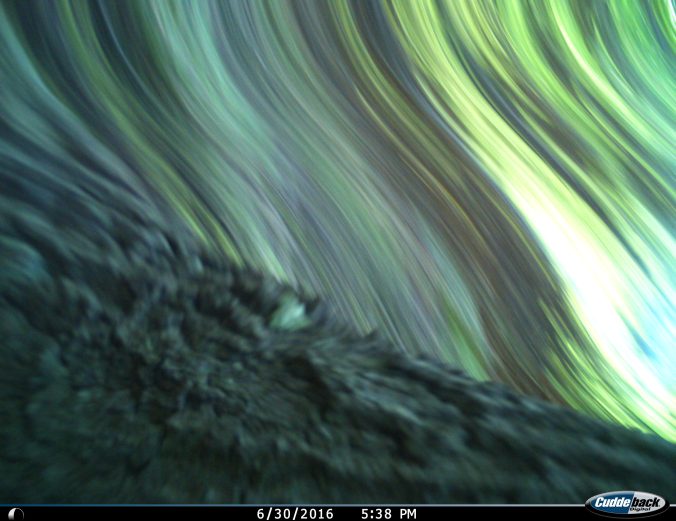
Bonus Footage: This must be from when I dropped the camera during the set-up process. Looks like swirly fun in an impressionistic dream kind of way.

I’m going to leave the camera out for a bit longer, and I can keep you updated if I find anything else exciting!

In the meanwhile, if you are interested in some hands-on field work, but with the help of naturalists and scientists, the National Park Service is holding a series of BioBlitzes across the country this year in honor of 100 years of parks. BioBlitzes are a citizen science effort of conducting biological surveys in a short period of time. They are a great way to go on a guided exploration of biodiversity, plus they can be a huge help to keeping inventory of all living things in the focus area–from animals to plants to fungi, everything! Many of the BioBlitzes occurred in May, but different parks around the country are hosting their events all the way until later in the year. The map on the NPS page will help you search for BioBlitzes near you.

Well, that’s it for today. Keep exploring!

Backyard Wildlife

Turn on Discovery Channel, Animal Planet, or Nat Geo Channel, and you will probably be able to find a couple cool shows about exciting animals. Fierce predators, insanely huge fish, marine mammals that you just want to cuddle to pieces – really interesting stuff! The downside is that most wildlife shows focus on “exotic” animals. You’ve probably even seen a show on something like arctic foxes from the tundra or elephants herd on the African grasslands, but a PBS Nature special your own backyard wildlife? Maybe not quite as common. So how about we take a firsthand look at what’s in our own neighborhoods together? How will we do that?

Ladies and Gentlemen, for my next trick, I would like to make pictures out of thin air! Well, I’ll take pictures with a strategically placed trail camera that is motion-and-heat-sensing to allow snaps of moving animals but not the blowing wind. Doesn’t quite have the same ring to it…ah well.

Trail cameras, or camera traps, are a fantastic way for researchers to observe elusive wildlife (like snow leopards or Andean bears), and state and federal agencies use them monitor wildlife populations across the country. I used a trail camera in my Wildlife Monitoring class that I taught at the Pittsburgh Zoo and PPG Aquarium, and I’ve heard of some school districts allowing teachers to use them for class projects. But, honestly, they can also be useful for learning on your own or with your kids.

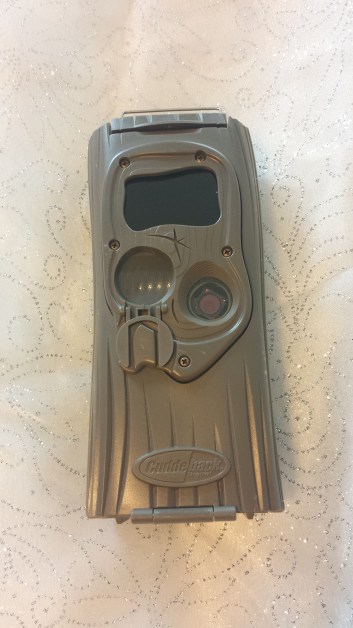
If you guys would like to play along at home, I bought this camera:

20160630_141146

Sparkly background not included

It’s a Cuddeback trail camera that I got from Cabela’s for $99. Though often used by hunters, I just want to scope out what kind of wildlife is right there under my nebby nose. I’m setting this up today in the backyard of a friend’s house, so I will be sure to share with you all as soon as I have some images!

For those of you want to try this, I would highly encourage you to give it a whirl. If you’re concerned about the price, let me know and I can try to put folks in touch if they would like to share a camera. Land owners, you might be amazed with what visits your property. If you really don’t have any space (I don’t either, no worries), it might worth a try to ask a local park if they would let you do a trail camera survey for fun. They might be interested in what you find as well! Just be sure when you’re using a camera that you obey all local ordinances involving privacy, and if it’s not your land, ALWAYS get permission first!

Once you’ve found a camera, it simply needs to be placed (mine straps around a tree), and then left alone. Super easy. Do keep in mind where the camera is pointing, or you will have pictures of either all dirt of all tree top. I would also recommend checking your camera on a regular basis to be sure it isn’t stolen or damaged. Beyond that, if you’re just placing a camera for the joy of learning, it’s a very simple process. (If you are interested in more technical details for research or wildlife management, see here.)

In the past, I’ve used my trail cam in the Highland Park area in Pittsburgh. We’ll see what I find next in the North Hills!

I__00060

That was MY clover!!

I__00007

Female at night

I__00027

Young buck at night

I__00005

Ahh, the elusive Maria Sleeve.

Recycling – How it Happens in the ‘Burgh

Every other week in the city of Pittsburgh, 14 trucks per day are sent on routes that each include 900-1100 stops. At the different stops, the trucks may encounter a few small blue plastic bags, or they might find a large blue can or bin holding loose plastics, glass, and cardboard. An important yet largely thankless job, collectors work with materials that may be dripping with water from a heavy rain, or may be scattered around a curb, or they may be improperly contained—leading to confusion as to whether or not the materials were actually meant for them. These crews are our recycling collectors, and when their routes are done, they deliver an average of 60 tons of recyclables per day to a materials recovery facility, or a MRF (say “murf”).

Have you ever wondered what happens after that point? I tend to set out my blue bags at night, and *magic* they’re gone the next morning. Or have you ever wondered if there is any way that we as citizens can work with our city to maximize the efficiency of recycling? Since I was curious about all of this, I contacted the city’s Department of Public Works and spoke with Kyle Winkler, the city’s recycling supervisor. With his B.S. in Environmental Science and several years of experience in environmental non-profits before his current position, he was able to give me some great insights that I would love to share with you all.

Where Does our Recycling Go and What Happens to It?

That was my first big question, and I learned the city contracts recycling facilities to handle the processing of our commodities. Within Pittsburgh proper, Recycle Source in Hazelwood handles our recyclables, but other municipalities may contract other facilities in the area, including the MRF on Neville Island. These facilities then use a variety of methods to process and sort all of our leftover stuff like shampoo bottles, peanut butter jars, etc.

As a big picture, commodities are mainly sorted using mechanical processes, with some human quality-control mixed in. First things first, though, and that means breaking open those blue plastic bags many of us pack our materials into with a “bag breaker” and creating burden depths of materials on the conveyor belts that will ultimately carry materials into the proper machinery. This is an important step as dried, separated materials can only be stacked so high on a conveyor belt before sorting, but too little material ultimately isn’t efficient.

Next comes the mechanical separation of materials from the conveyor belts. The easiest way to grasp the whole process is to see it, like in this video from Boulder County, Colorado. As a broad summary, though, items are first screened for fiber, cardboard, or mixed paper products. As the processing continues, all glass is broken down on a glass breaker, and magnets begin pulling out metals. Aluminum (i.e., soda cans) is sorted out using reverse Eddy currents. Towards the end of the process, optical sorters separate plastics based on their color and density, and back on the fiber side, paper is sorted and baled based on color.

After the materials have been sorted, they can be sent to various manufacturers and industries that will make use of the various commodities. Here in Pittsburgh, this includes steel mills, paper mills, and other downstream sorters who might need to process commodities further. Glass, for example, goes on to another facility that further sorts the glass by color.

How Can We as Citizens Make the Job Easier for the City?

One of the things I learned during my conversation with Winkler is that Pittsburgh, like many other cities, can’t actually recycle the blue plastic bags that many of us sort our trash into.

“The city can’t go to containerized recycling right now, but it’s helpful for items to go into the trucks loose to expedite sorting,” Winkler says. It avoids the issue of having to clear plastic bags from machinery, reduces the risk of commodity contamination, and it saves all of that plastic going to waste. What does that mean for us? Buy a large blue bin rather than using bags. With items loose in the bin, collection crews can quickly pick up our recyclables, and processing crews can quickly sort materials where they need to be. Many grocery stores can recycle (well, technically down-cycle) our plastics bags, so look into those for when you forget your reusable bags (hate when I do that!)

We also can be more efficient recyclers by checking in with city’s website to see what can and cannot be recycled. Odd items (e.g. clothing or electronics) that make it into recycling bins slow down processing because they cannot be managed at this kind of facility. Winkler also added to avoid any food-related paper products. “Not paper plates, not napkins, not paper towels, paper cups—any of that.” And who wants our nasty pizza grease anyway?

The last of the super simple things we can do: breaking down and bundling our cardboard, following the city’s directions for packing materials for the curb, and separating recyclable from non. Really, anything to help the collection crews quickly spot and collect our recyclable materials helps the city get the job done quickly and efficiently.

Reduce, Reuse, Recycle

But what’s the one thing Winkler doesn’t want us to forget? “There are two other R’s ahead of recycling, and all the work and magic that goes into it. Reduction is so much more important. If we can avoid our consumption and disposal process, we can avoid using all the energy for the trucks, and machinery, and people in processing recyclables.”

He also reminds us that there is a reuse option. “When you have those single use containers, can you use them again? Milk jugs, plastic containers. Can you help avoid the production of new stuff by reusing what you have? Can you bring a reusable cup to Starbucks instead of trying figure out a way to recycle their cups?”

Gettin’ It Done!

In spite some of the challenges that tend to plague most cities’ recycling programs (budgeting issues, momentum, etc), Winkler knows his department is on the right track “[I have a] great crew to work with, and we’re helping to improve the system in a good direction environmentally. We have goals that include reducing costs for everyone and becoming a green city like we are aspire to be. And we are achieving those goals.”